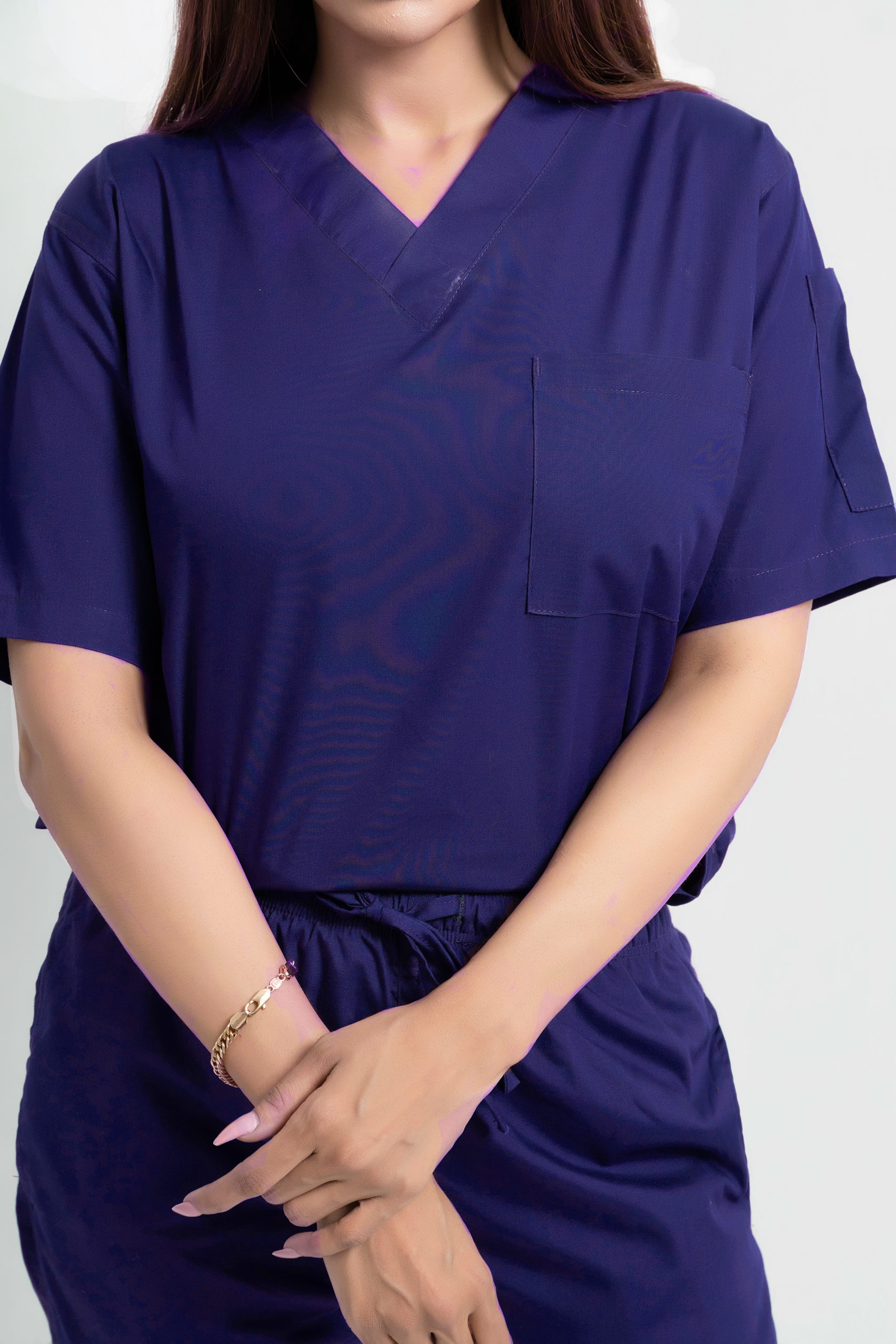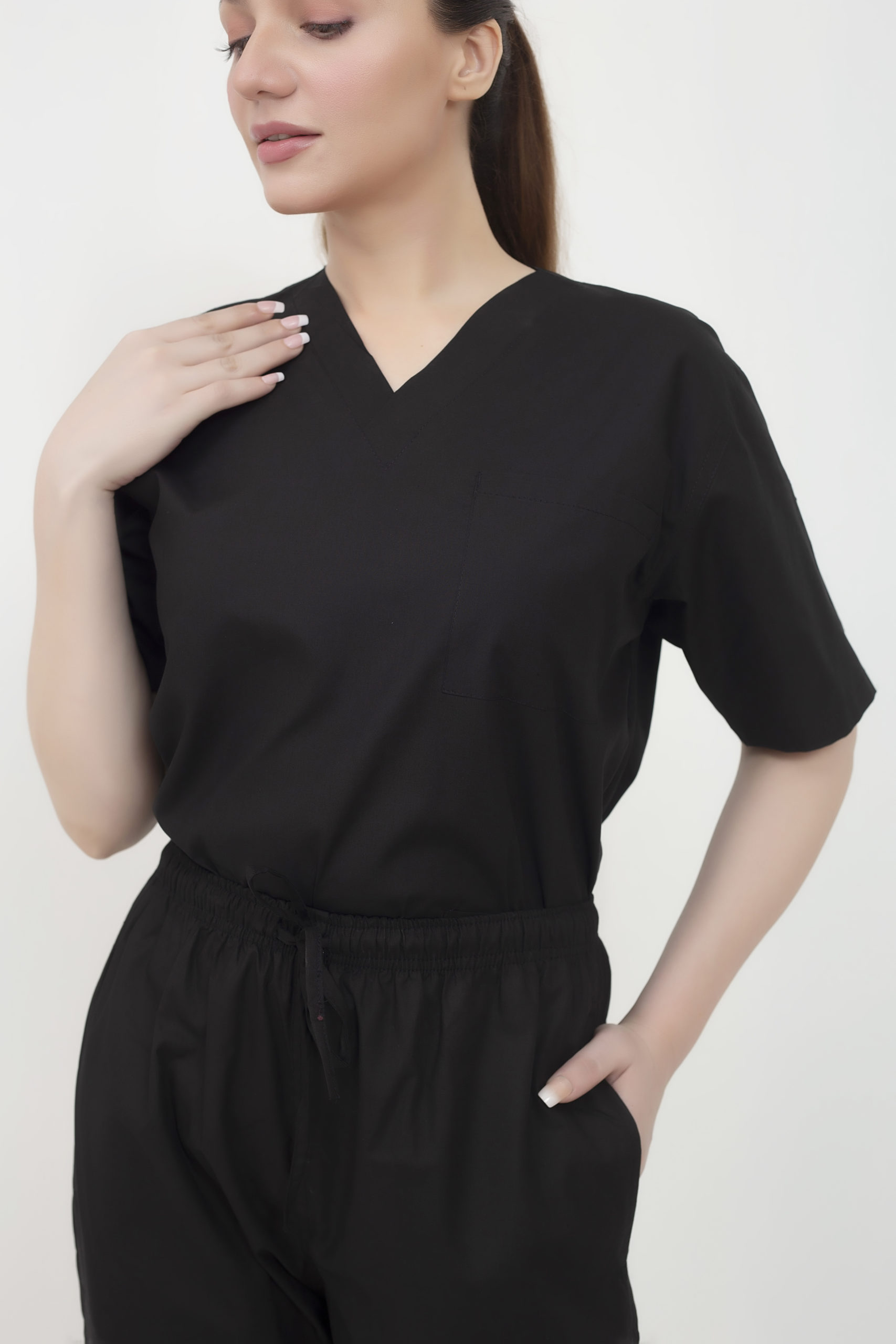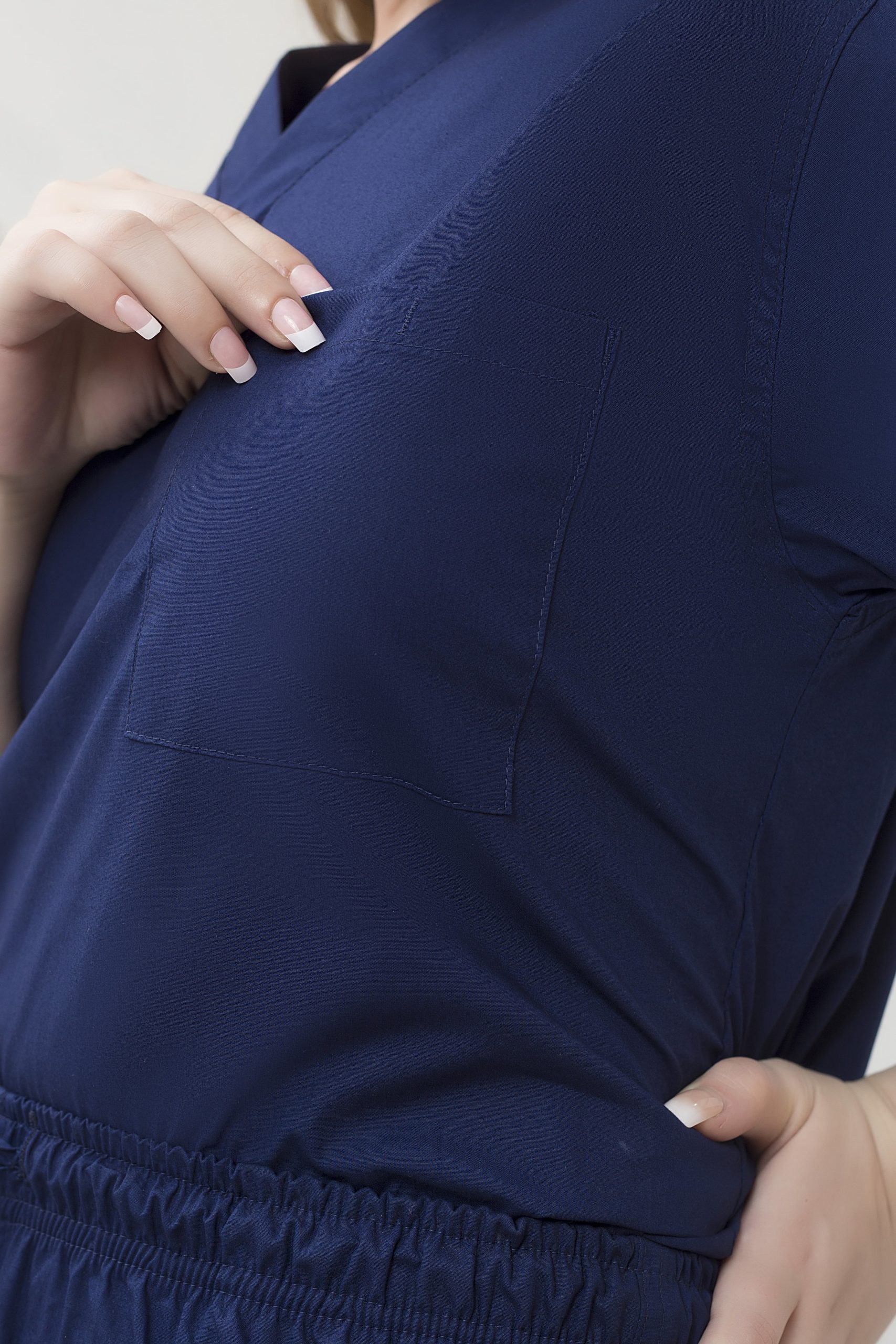
Working in healthcare means long shifts, demanding physical labor, and exposure to a variety of temperatures throughout the day. When winter arrives, staying warm becomes just as important as staying professional. Warm scrubs for winter aren’t just a luxury, they’re an essential part of your uniform that directly impacts your comfort, performance, and overall job satisfaction.
The right winter scrubs combine style with functionality, offering insulation, moisture-wicking properties, and durability to keep you warm without compromising movement or breathability. Whether you’re a nurse, physician, technician, or healthcare student, finding quality warm scrubs designed specifically for winter conditions can make a significant difference in your daily experience.
This comprehensive guide explores everything you need to know about warm scrubs for winter, from understanding different fabric technologies to selecting the perfect pair for your needs.
Maintaining optimal body temperature during winter shifts is more than just comfort, it’s about maintaining peak performance. Cold environments can increase stress levels, reduce focus, and even affect circulation, all of which impact the quality of care you’re able to provide.
Interesting Fact: Research shows that employees who are comfortable in their work environment demonstrate improved cognitive function and decision-making abilities. In healthcare settings where quick thinking and precision are critical, warm scrubs literally help you perform better.
Additionally, many healthcare facilities maintain cooler temperatures to prevent the spread of infection and control humidity levels. This means you’re not just dealing with outdoor winter weather, you’re navigating cool indoor environments for 8, 10, or 12+ hour shifts. The right warm scrubs help you maintain steady body temperature throughout your entire shift.
Warm scrubs also boost confidence and morale. When you feel comfortable and warm, you naturally feel more empowered and ready to tackle the challenges of your day.
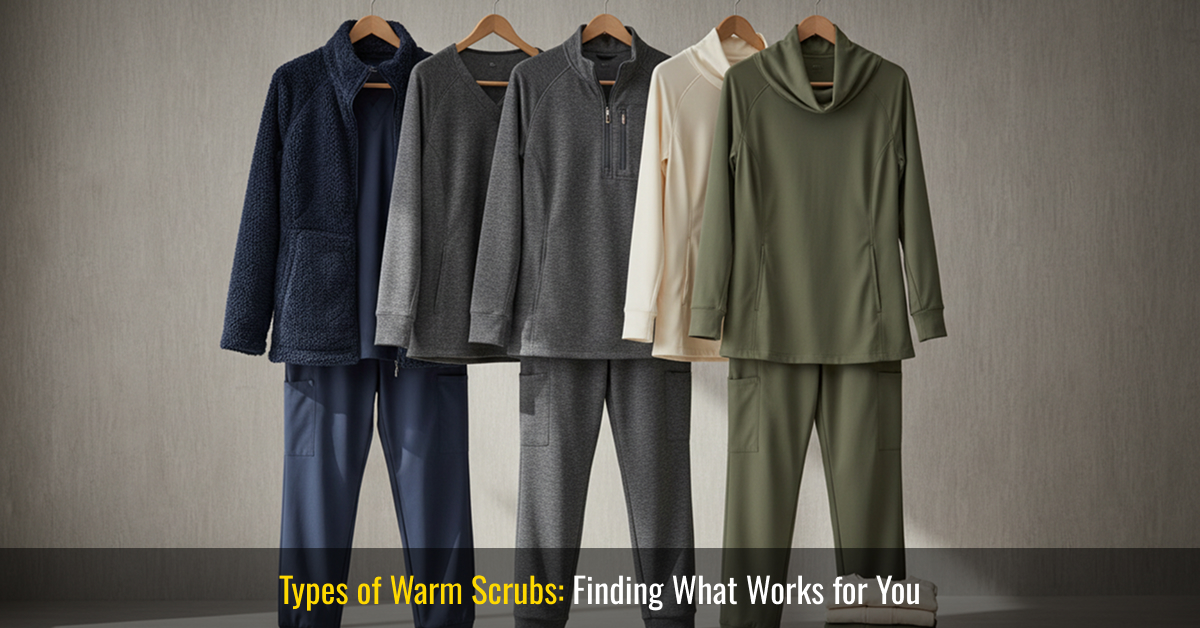
Not all warm scrubs are created equal. Understanding the different types available helps you choose the option that best fits your workplace, climate, and personal preferences.
Insulated scrubs feature thermal lining or thickened fabric designed to trap body heat and provide maximum warmth. These are ideal for healthcare workers in northern climates or those working in particularly cold environments.
Key Features of Insulated Scrubs:
Thick nursing scrubs use heavier-weight fabrics that naturally provide extra warmth. These scrubs are often made from premium cotton blends or specialized synthetic materials that offer durability and warmth in one package.
Benefits of Thick Nursing Scrubs:
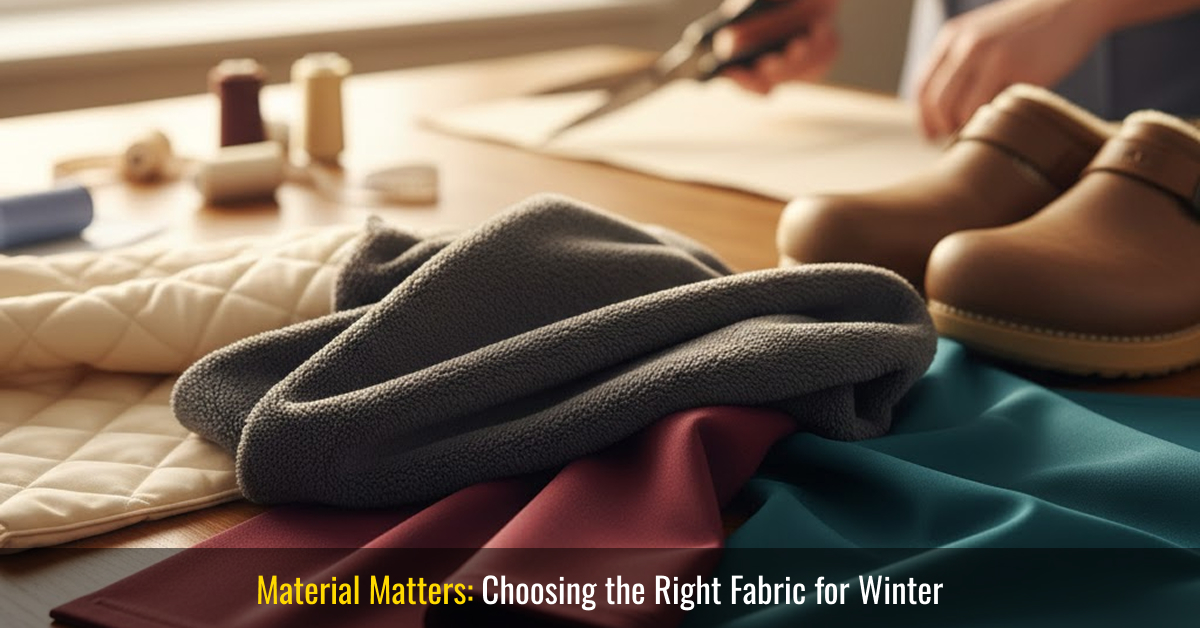
The fabric you choose directly impacts both warmth and comfort. Different materials offer distinct advantages, and understanding these differences helps you make the best investment for your winter healthcare wardrobe.
The best moisture-wicking scrubs pull sweat away from your skin and distribute it across the fabric’s surface, allowing it to evaporate quickly. This technology is crucial in winter because it prevents the paradox of feeling both cold and sweaty during your shift.
Interesting Fact: Moisture-wicking fabrics were originally developed for athletic and military applications. Healthcare professionals now benefit from the same technology that keeps athletes and soldiers comfortable during demanding work.
Look for scrubs made with performance fabrics like polyester blends, spandex combinations, or specialty weaves that move moisture away from your body. When combined with insulation or thicker materials, moisture-wicking properties ensure you stay both warm and dry.
Cotton-Polyester Blends and Synthetic Materials:
Recommendation: For winter wear, choose scrubs made from cotton-polyester blends (typically 65% polyester/35% cotton or similar ratios) to maximize both warmth and moisture-wicking capabilities.
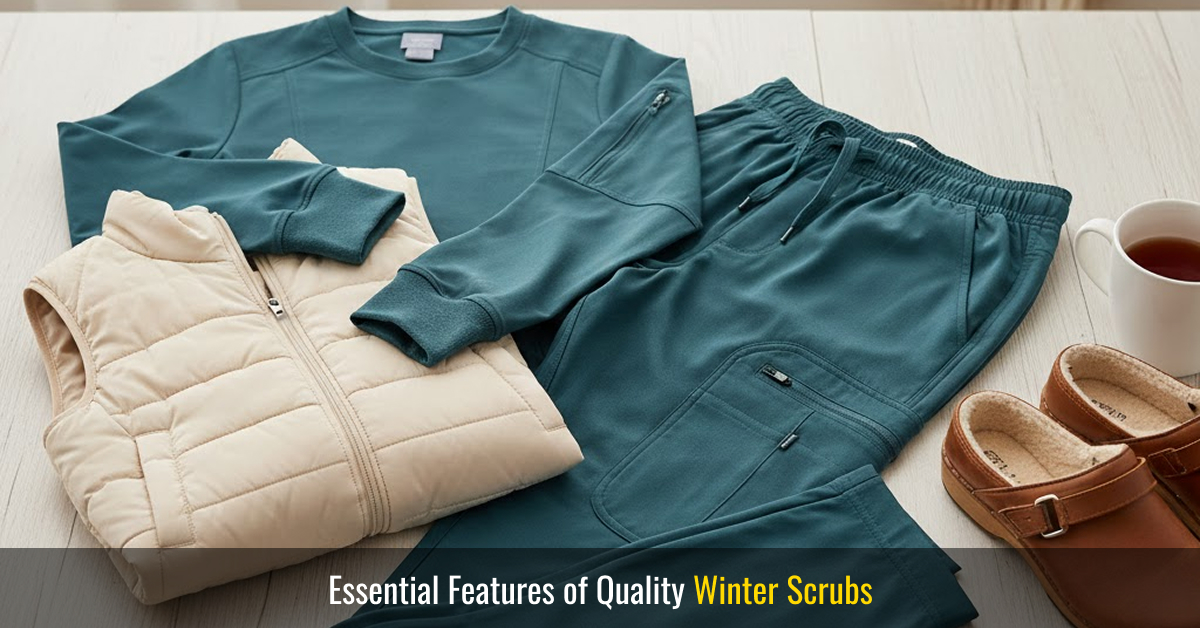
Beyond fabric choice, several design features distinguish excellent winter scrubs from standard options.
Reinforced Construction and Durability:
Look for scrubs with reinforced seams, particularly at stress points like pockets and armholes. Double-stitched seams withstand frequent washing and wear better than single-stitched alternatives.
Functional Pockets:
Winter scrubs should include multiple, securely designed pockets to keep your hands warm and carry essential items. Deeper pockets are especially valuable in cold climates.
Comfortable Fit:
Thicker materials can sometimes restrict movement. Quality winter scrubs are designed with enough roominess to accommodate insulation without limiting your ability to bend, stretch, or perform clinical tasks.
Easy-Care Instructions:
The best winter scrubs are machine-washable and can withstand frequent laundering without shrinking, fading, or losing their thermal properties.

Interesting Fact: November is peak season for winter scrub sales in the United States. Smart healthcare professionals plan their winter wardrobe purchases during early November to access the widest selection and secure their preferred styles before popular sizes sell out.
If you’re planning to purchase warm scrubs for winter, consider shopping in October or early November. You’ll have better selection, and many retailers offer seasonal promotions during this period. Waiting until December often means limited availability in popular sizes and styles.
Additionally, the trend toward stylish, comfortable healthcare apparel means you’re no longer limited to basic styles. Modern winter scrubs come in attractive colors and patterns, allowing you to maintain your personal style while staying warm and professional.
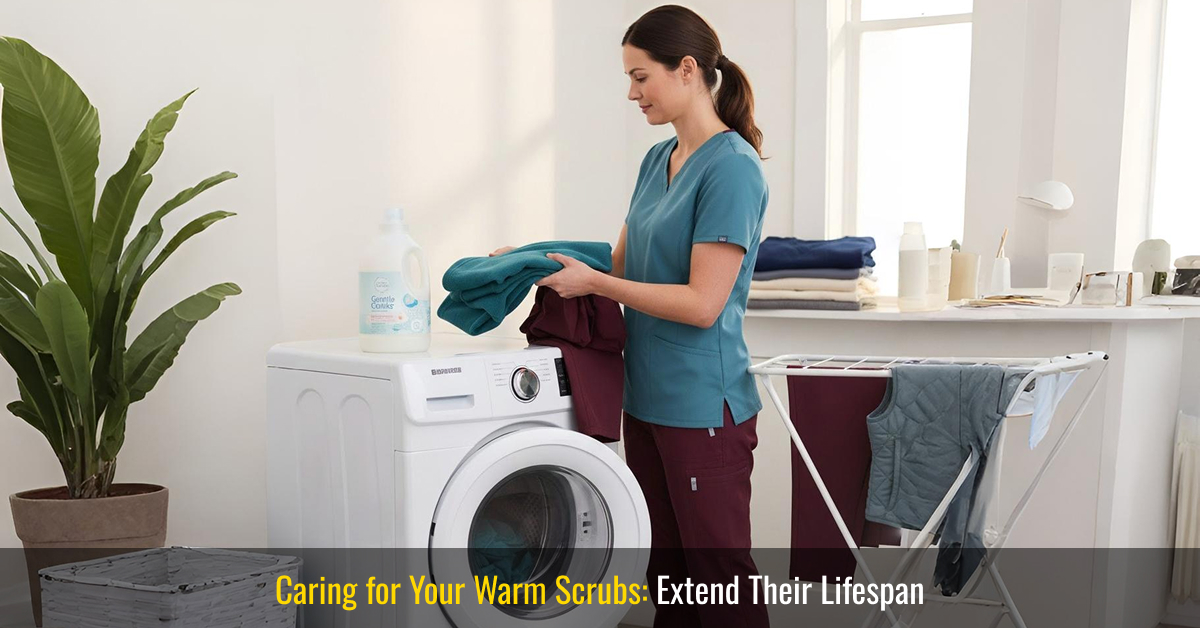
Investing in quality warm scrubs deserves proper care. Following best practices for washing, drying, and storing your winter scrubs ensures they maintain their warmth, appearance, and durability throughout the season.
Warm scrubs keep you comfortable during long winter shifts, improve focus and cognitive function, maintain steady body temperature in cool healthcare environments, and boost confidence and morale. Quality warm scrubs also feature moisture-wicking properties to keep you dry while maintaining insulation.
Insulated scrubs include thermal linings or thickened fabrics specifically designed to trap and retain body heat. Regular scrubs lack this specialized insulation, making them less suitable for cold-weather work. Insulated scrubs provide maximum cold-weather protection while maintaining mobility and breathability.
The best moisture-wicking scrubs are made from cotton-polyester blends (65% polyester/35% cotton minimum) or performance fabrics specifically designed to pull sweat away from skin. Look for scrubs labeled as having “moisture-wicking” or “performance fabric” technology. These materials combine warmth with excellent sweat management.
For thick nursing scrubs, look for premium cotton-polyester blends, spandex-enhanced synthetics, or specially woven performance fabrics. These materials provide durability, natural breathability, superior moisture-wicking, and excellent color retention. Avoid 100% cotton for winter as it doesn’t wick moisture effectively in demanding healthcare environments.
When choosing winter scrubs, consider: (1) Your climate and workplace temperature, (2) Whether you need insulated or thick nursing scrub options, (3) Fabric composition for optimal moisture-wicking and warmth, (4) Construction quality with reinforced seams, (5) Functional pockets and comfortable fit, (6) Your facility’s color and style requirements, and (7) Care and maintenance needs. Quality warm scrubs are an investment in your comfort and performance.
While layering is an option, dedicated warm scrubs are designed to work together as a complete system. Warm scrubs incorporate moisture-wicking and insulation features that regular scrubs with added layers can’t replicate. Additionally, bulky layering under regular scrubs can create discomfort, restrict movement, and appear unprofessional. Warm scrubs provide a more elegant and functional solution.
With proper care, quality warm scrubs typically last 12-18 months of regular use. Monitor for signs of wear including pilling, fading, loss of insulation properties, or seam deterioration. Investing in 3-5 high-quality warm scrubs and rotating them through the season extends their lifespan while ensuring you always have clean, comfortable options available.
Winter healthcare work doesn’t have to mean sacrificing comfort for professionalism. Warm scrubs for winter represent a smart investment in your well-being, performance, and job satisfaction. Whether you choose insulated scrubs for maximum protection, thick nursing scrubs for reliable durability, or performance fabrics with superior moisture-wicking, the right winter scrubs transform your seasonal work experience.
Remember that peak season for winter scrub shopping is November. Plan ahead, prioritize quality fabrics and construction, and select scrubs that align with your facility’s requirements and your personal preferences. With proper care and maintenance, your warm scrubs will provide reliable comfort throughout the cold season and beyond.
As a healthcare professional, you deserve gear that supports your performance and respects your comfort. Warm scrubs for winter do exactly that, keeping you cozy, dry, and ready to provide excellent patient care, no matter how cold it gets outside.

 Optimized by Seraphinite Accelerator