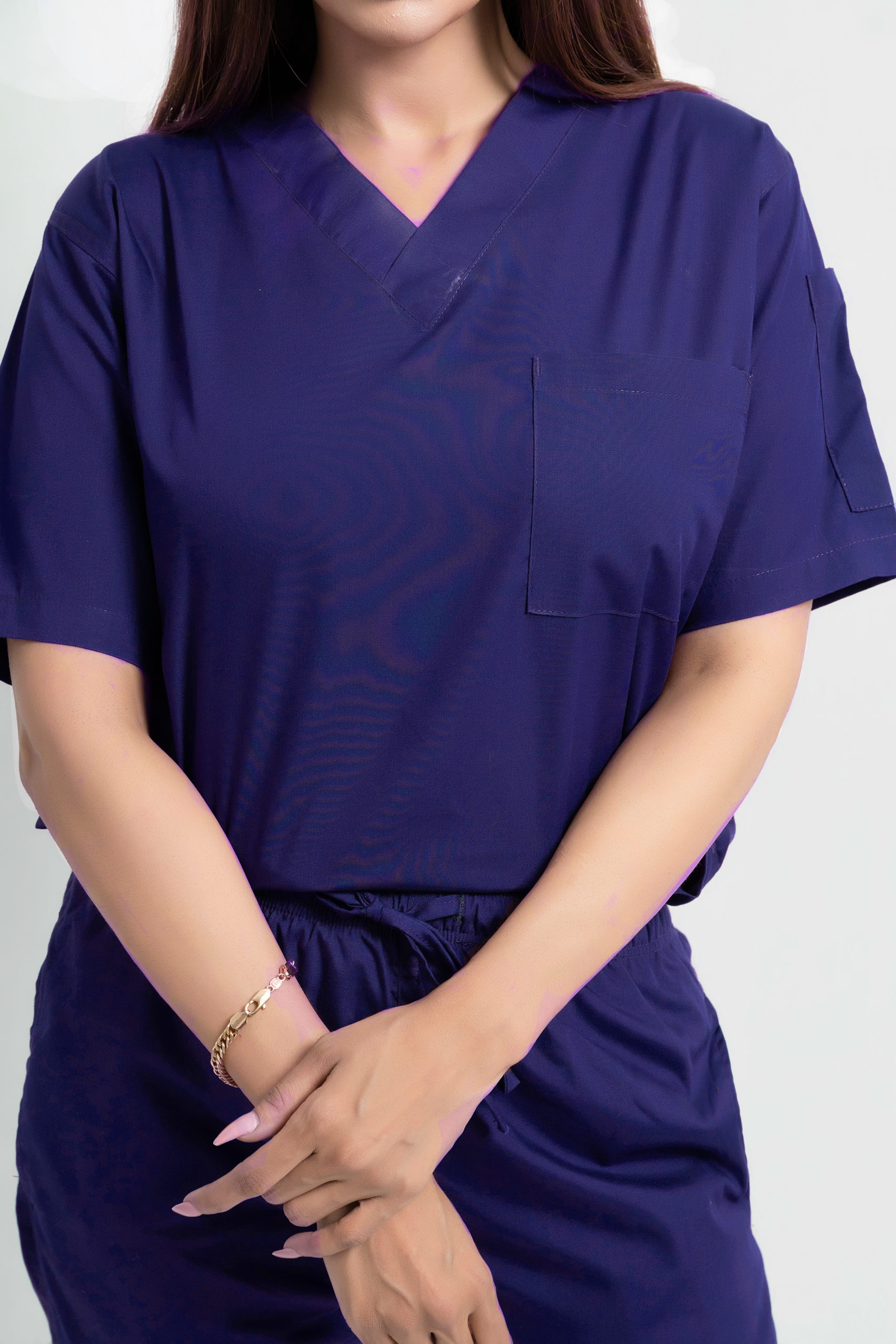
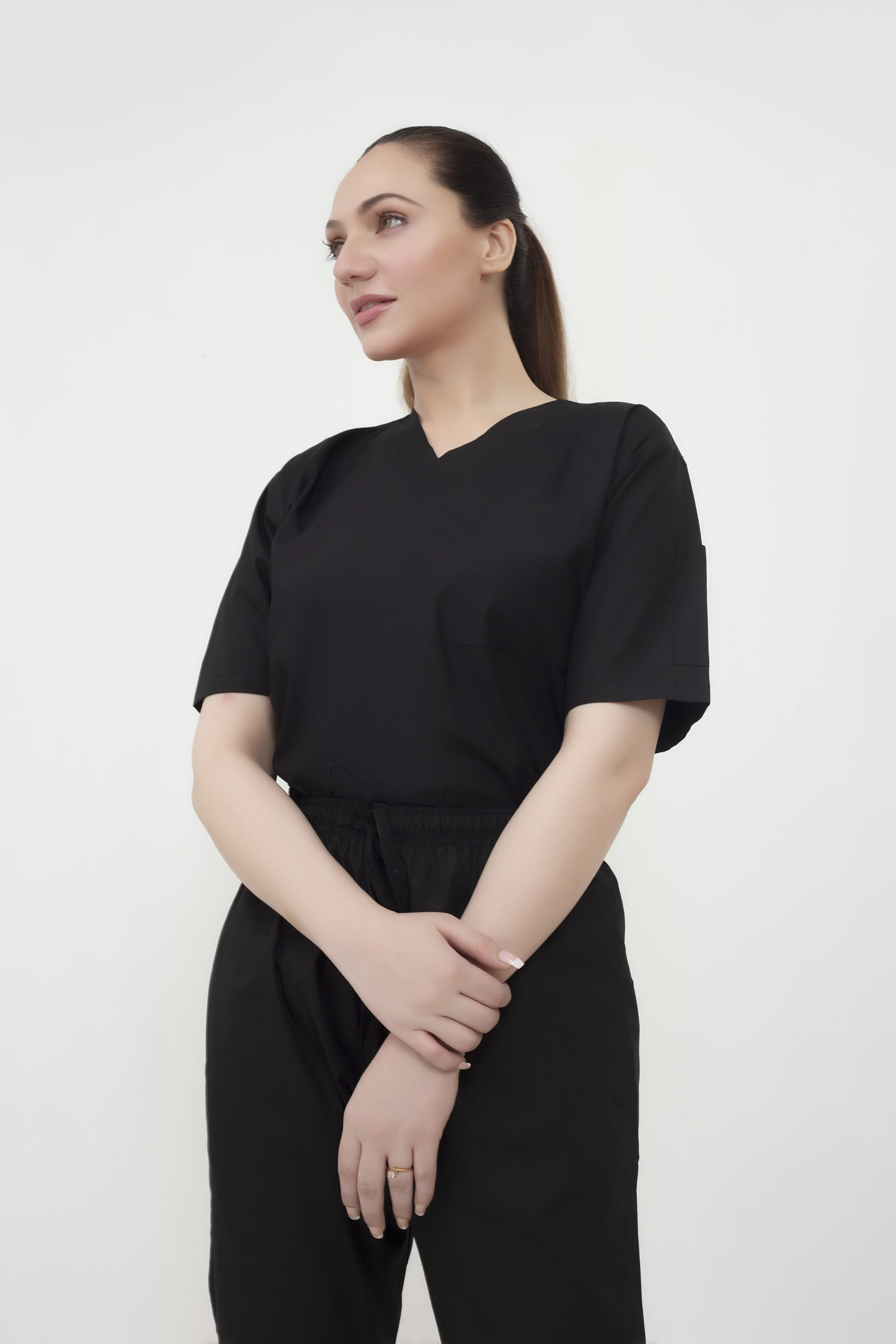
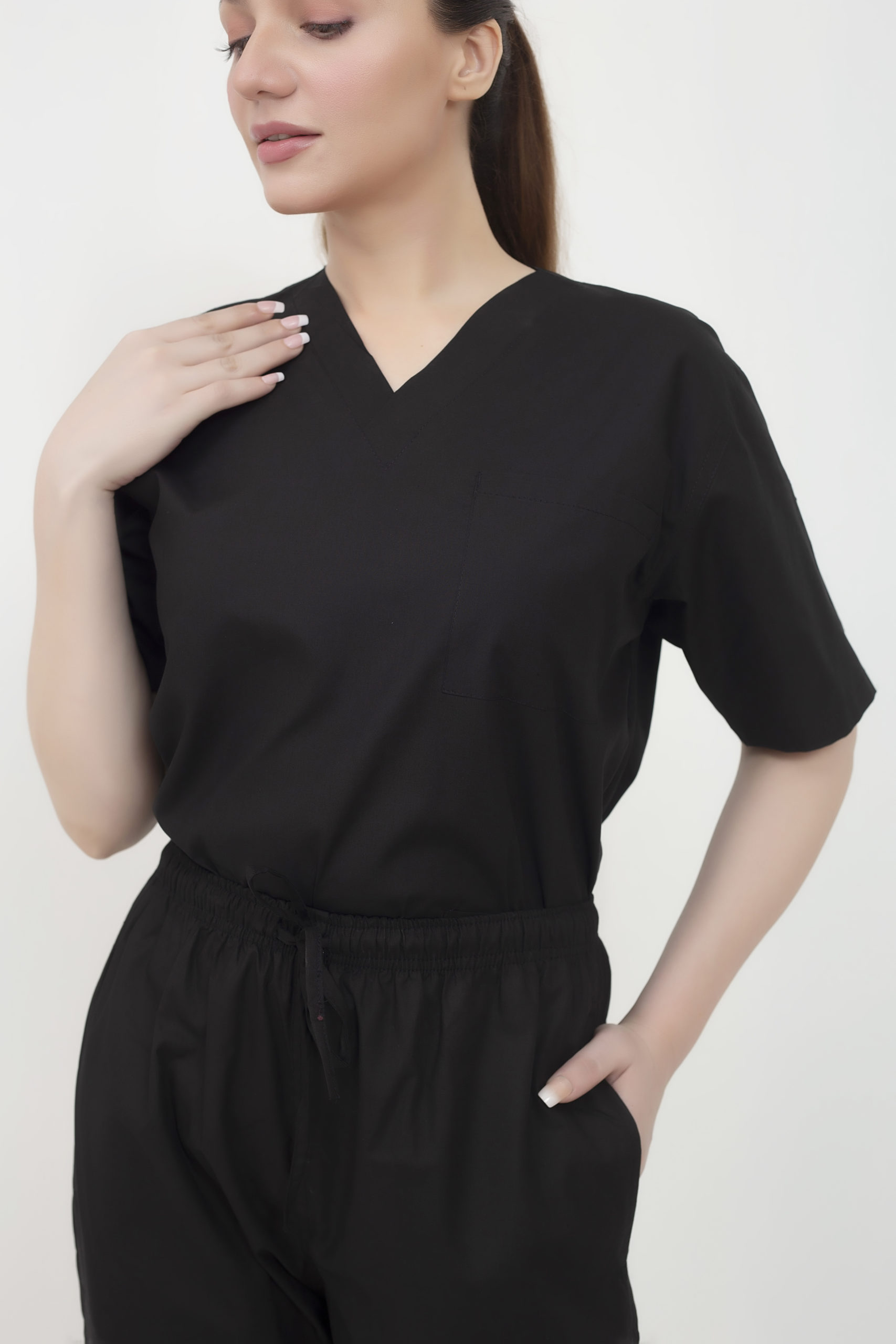
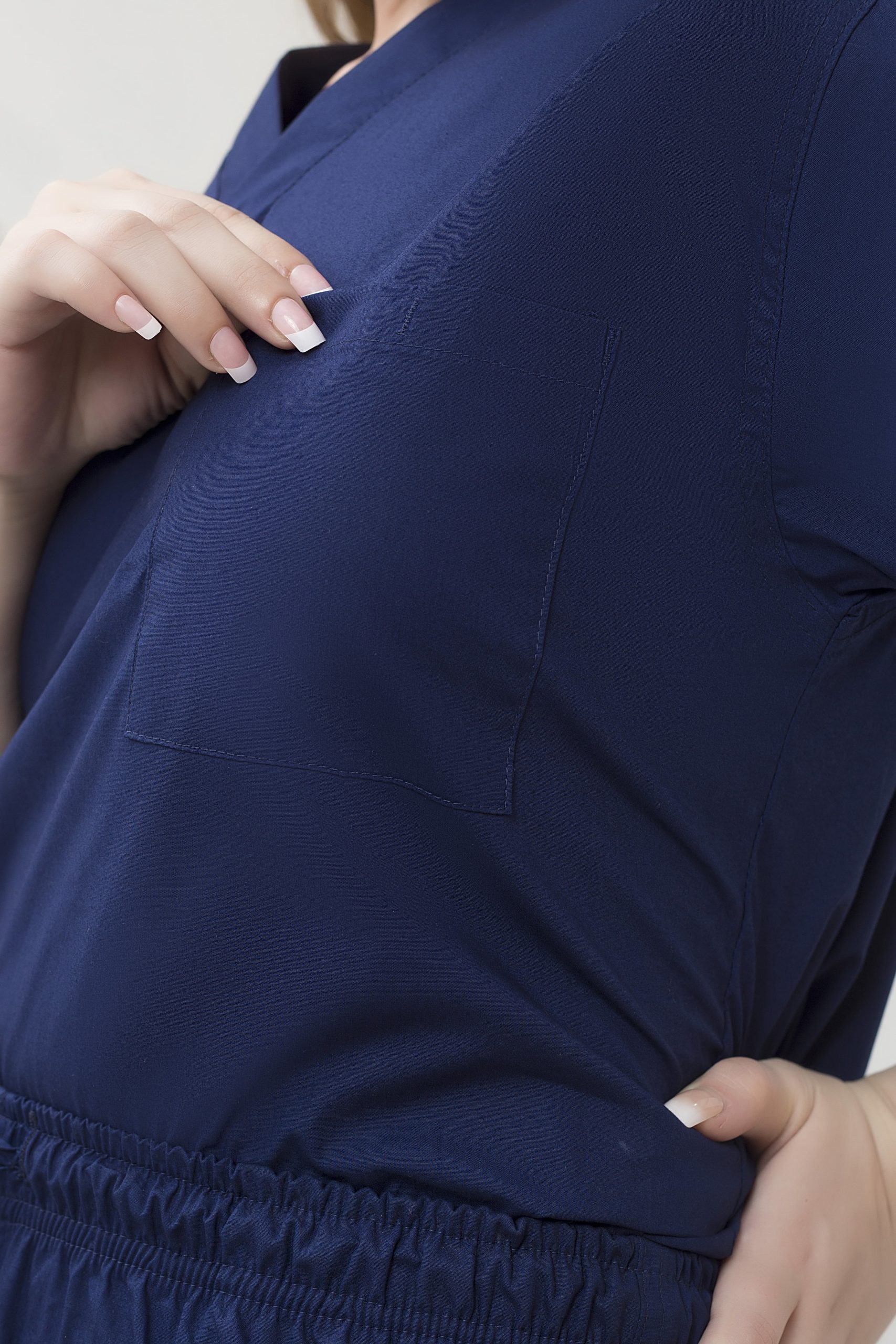
If you work in a fast-paced healthcare setting and spend a lot of time on your feet, you already know that what you wear is important. Waterproof scrubs have changed the game for nurses, doctors, medical students, and other health professionals who have to deal with everything from everyday spills to shifts that make them sweat. Waterproofing is only one part of the puzzle. The best scrubs keep you dry, comfortable, and focused no matter what your shift throws at you. They do this by combining liquid repellency, moisture-wicking technology, and great breathability.
In this guide, we break down everything you need to know about water proof scrubs for women: how they work, what features to look for, and how to choose the right pair for your specific needs.
Waterproof scrubs can repel liquids almost instantly, reducing cross-contamination risk, a crucial advantage in clinical settings where exposure to blood, saline, or other fluids is a daily reality.
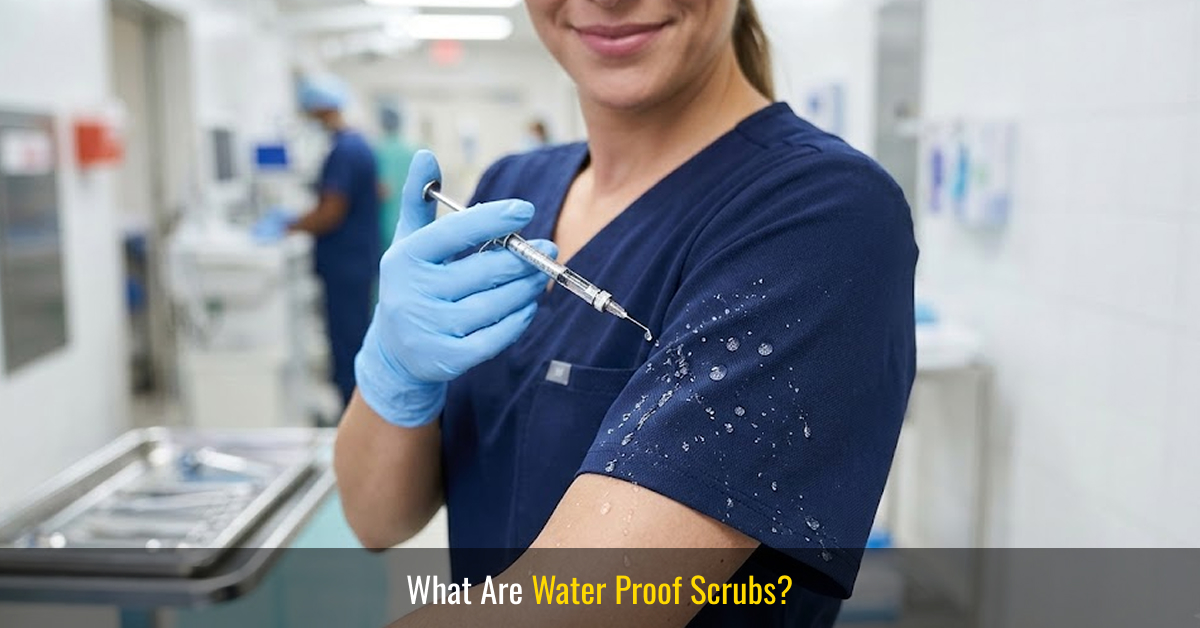
Water proof scrubs are medical-grade workwear designed to resist liquid penetration. Unlike regular cotton scrubs that absorb spills and stains, waterproof or water-resistant scrubs are treated with special coatings, most commonly Durable Water Repellent (DWR) finishes, or constructed from inherently hydrophobic synthetic fabrics like polyester blends, nylon, or spandex-infused materials. The surface tension created by these treatments causes liquids to bead up and roll off rather than soaking in.
It is worth distinguishing between truly waterproof scrubs and water-resistant ones. Waterproof fabrics create a complete barrier against liquid penetration even under pressure, while water-resistant scrubs repel light splashes and spills but may eventually allow moisture through under sustained exposure. For most healthcare settings, high-quality water-resistant scrubs strike the right balance between protection and breathability.

Healthcare professionals routinely work 8 to 12-hour shifts, sometimes longer. Physical discomfort from poorly designed workwear is not merely an inconvenience; it can affect concentration, mobility, and even patient outcomes. Scrubs that cause overheating, chafing, or restrict movement can compound the physical and mental demands of an already high-stress profession. This is why modern water proof scrubs are engineered with comfort as a core priority, not an afterthought.
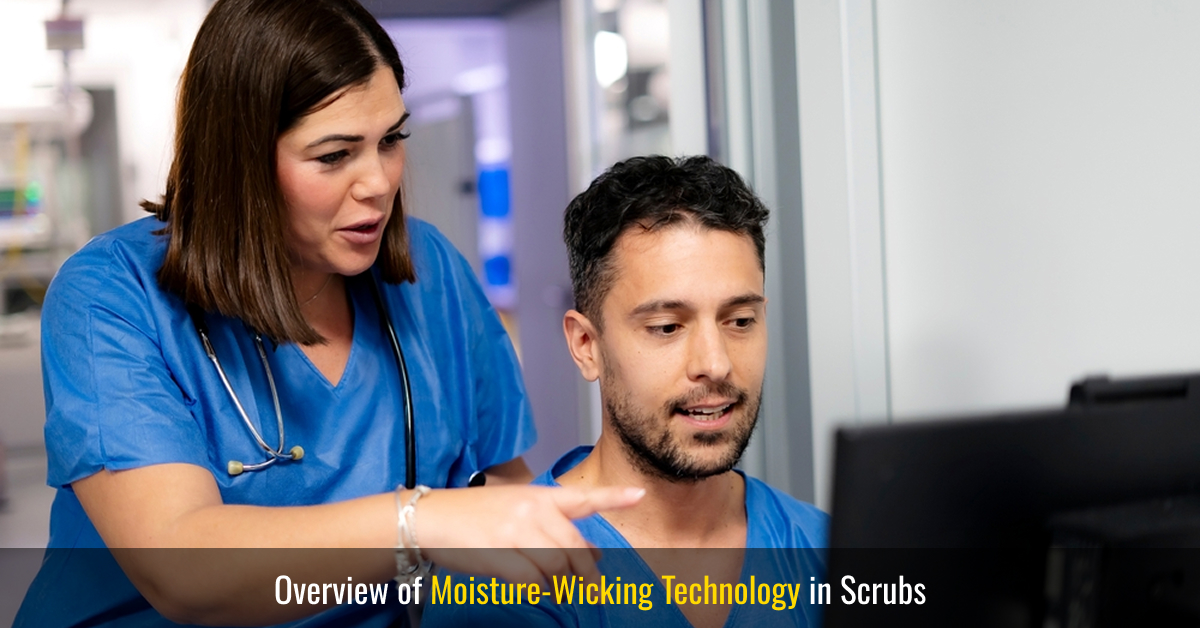
Moisture-wicking technology works by drawing perspiration away from your skin and moving it to the outer surface of the fabric, where it can evaporate quickly. This is achieved through capillary action, tiny channels built into synthetic fibers that transport moisture outward. The result is that your skin stays drier and your body temperature stays more regulated, even during the most demanding portions of your shift.
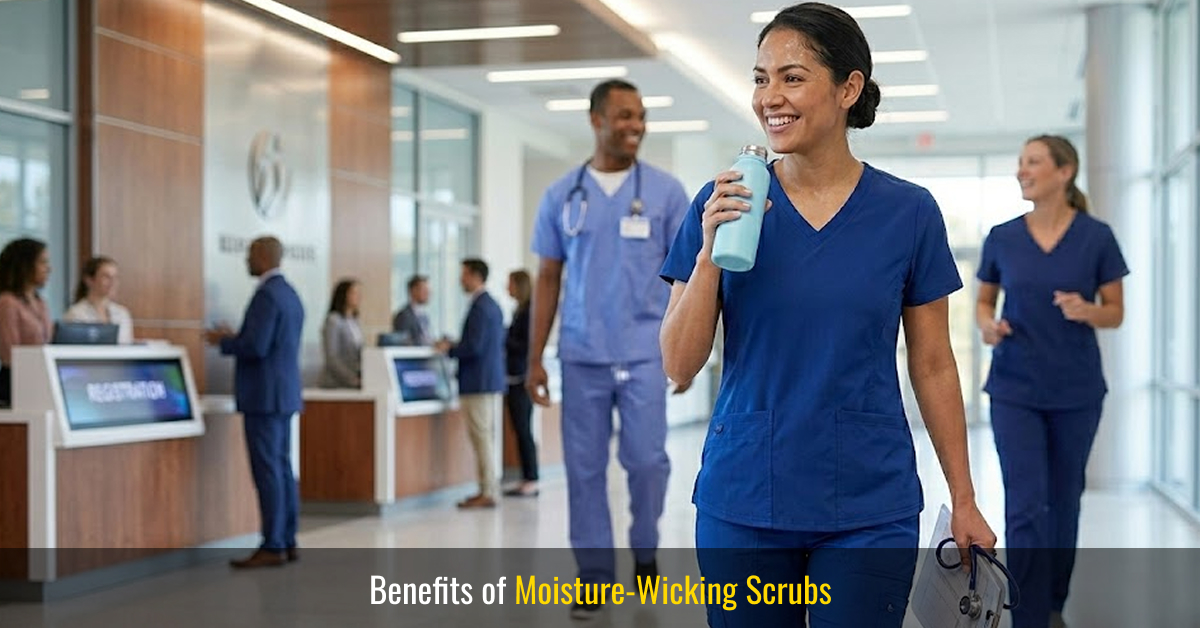
Standard cotton scrubs absorb sweat but hold onto it, leaving you feeling damp and uncomfortable. Moisture-wicking scrubs, typically made from polyester, nylon, or fabric blends with hydrophilic and hydrophobic properties, pull sweat away from the body in two stages:
Many moisture-wicking scrubs also incorporate anti-odor treatments, since bacteria that cause odor thrive in damp environments. By staying drier, you also stay fresher throughout your shift.

The benefits of moisture-wicking scrubs extend well beyond simple comfort:
Moisture-wicking fabric keeps you dry not just by absorbing sweat, but by actively moving it away from your body, making you up to 30% more comfortable during high-intensity work compared to standard cotton scrubs.
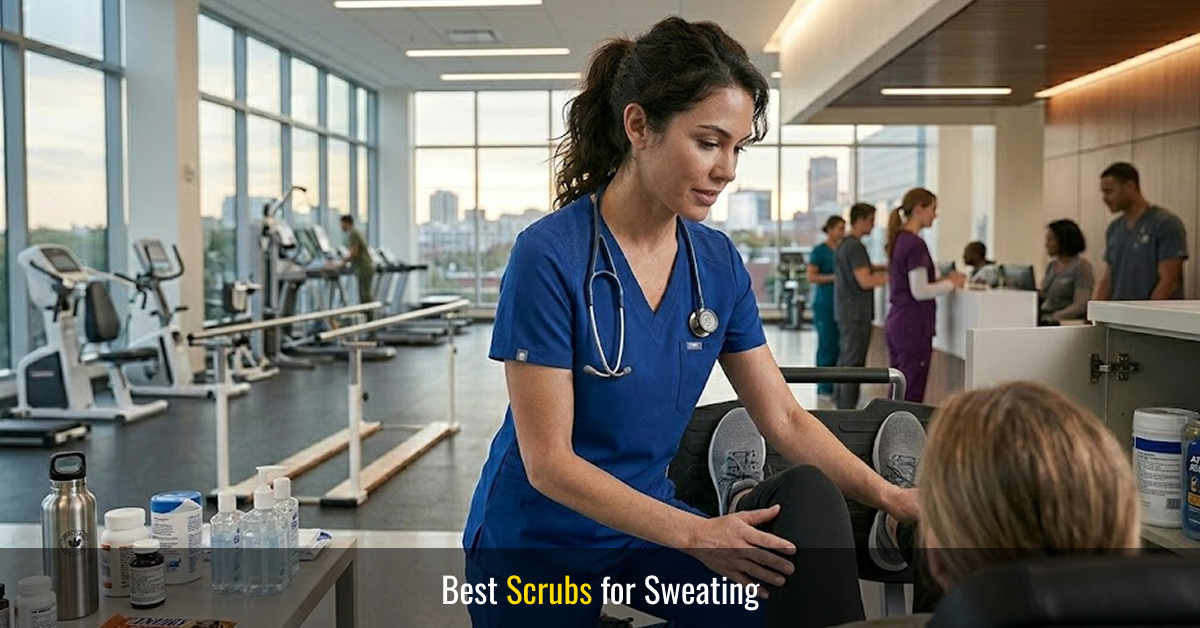
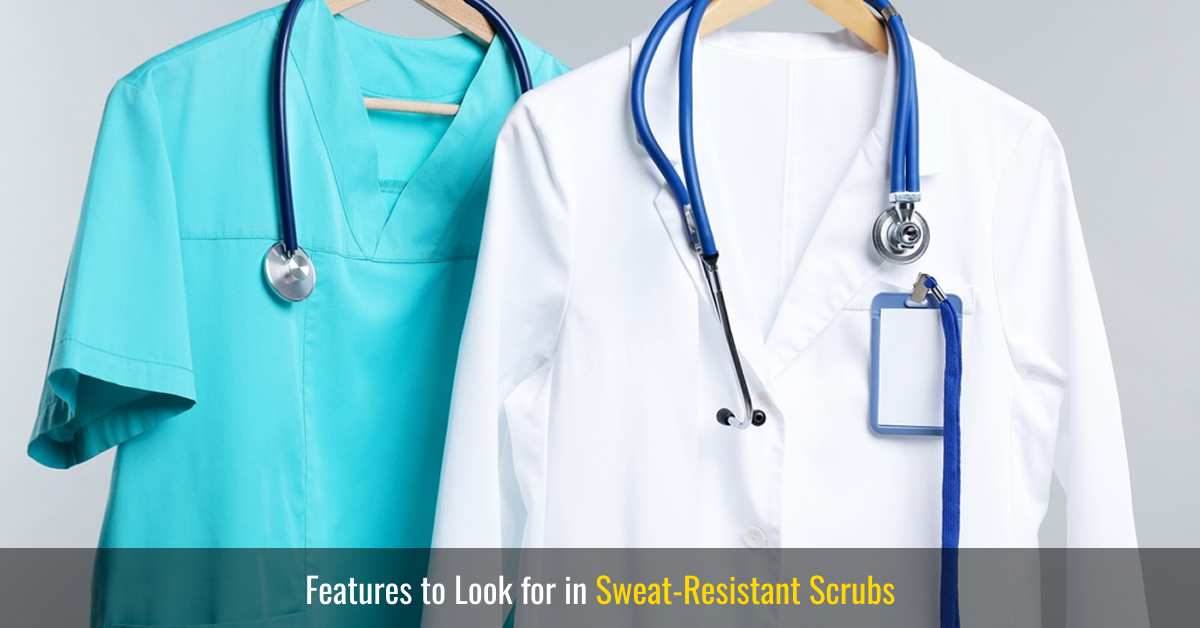
When shopping for the best scrubs for sweating, not all options are created equal. Here are the key features to prioritize:
Popular brands known for sweat-management performance in scrubs include FIGS, Cherokee Infinity, Dickies GenFlex, and Grey’s Anatomy Active, all of which offer styles specifically engineered for high-activity healthcare environments.


Breathability refers to a fabric’s ability to allow air and water vapor to pass through it, facilitating heat exchange between your body and the environment. The most breathable scrub materials include:

A fabric’s breathability rating is often measured by its Moisture Vapor Transmission Rate (MVTR), how much water vapor can pass through the fabric per day. Higher MVTR means more breathable. For most healthcare professionals, the ideal scrub achieves a balance: breathable enough to prevent overheating, yet structured enough to maintain a professional appearance and provide protective coverage.
Poor breathability leads to heat buildup, accelerated perspiration, and discomfort that worsens throughout the shift. The most breathable scrubs keep your core temperature lower, reduce fatigue, and ultimately help you perform better during demanding patient care situations.
Breathable scrubs don’t just enhance comfort, they enhance performance. Studies in occupational health have found that thermal comfort directly correlates with cognitive performance, meaning cooler, better-ventilated workwear can actually help healthcare workers think more clearly and react faster.

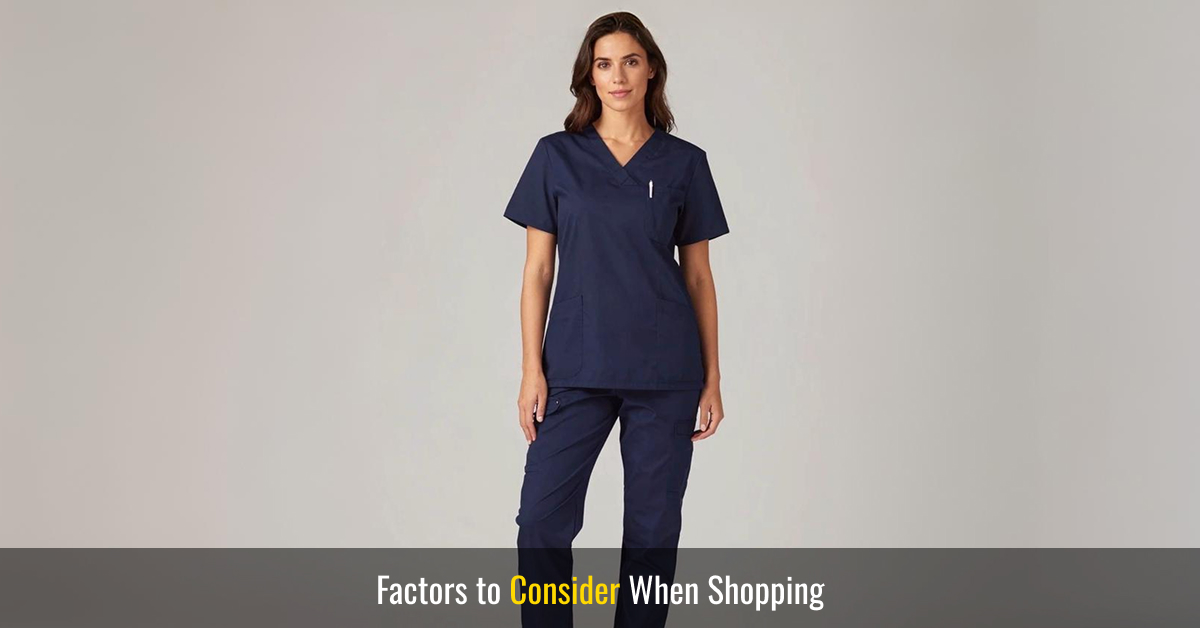
Finding the perfect water proof scrubs for your needs involves more than picking a color you like. Here’s what to evaluate before you buy:
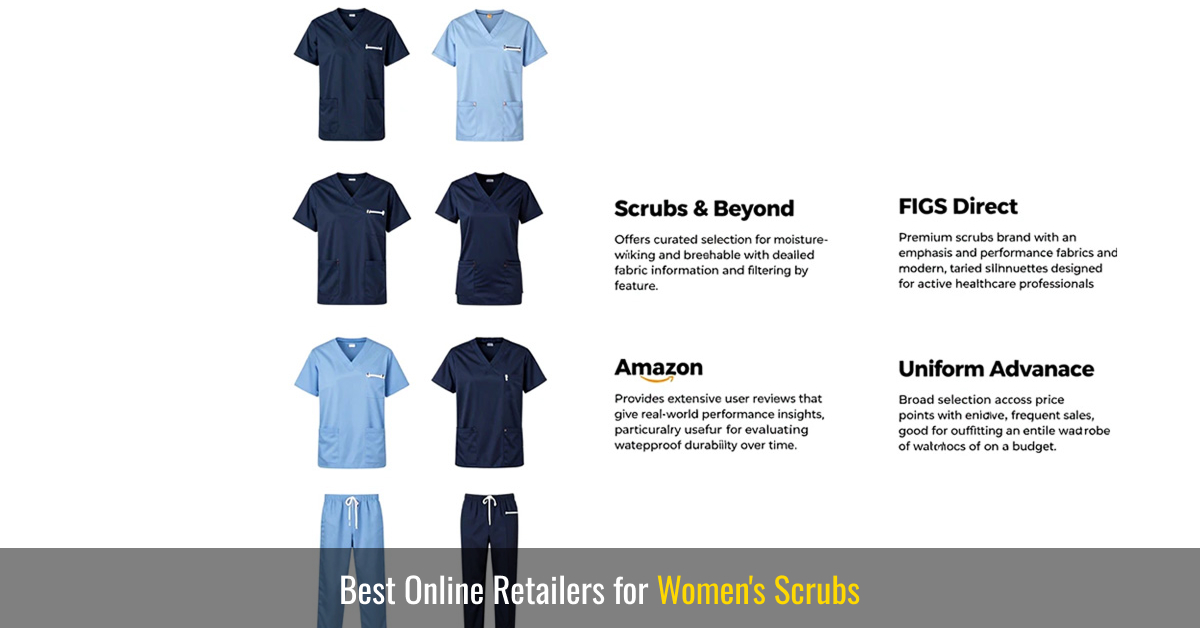
Shopping online gives you access to a wider selection and detailed fabric descriptions. Top retailers to explore include:
Water proof scrubs are healthcare workwear treated or constructed to repel liquids on contact. Their primary benefits include protection against bloodborne pathogen exposure, easier stain removal, extended garment lifespan, and a professional appearance that remains clean-looking throughout a demanding shift. For women in healthcare, they also offer the added benefit of reducing laundry time and fabric degradation compared to absorbent cotton alternatives.
Moisture-wicking scrubs use hydrophilic (water-attracting) fibers on the inside of the fabric and hydrophobic (water-repelling) fibers on the outside. This dual-action construction pulls sweat away from your body, spreads it across the outer surface, and allows it to evaporate rapidly. The net effect is a garment that keeps you significantly drier and more comfortable than traditional cotton scrubs, especially during high-movement or high-stress moments in your shift.
The best scrubs for sweating combine moisture-wicking fabric technology with lightweight construction, anti-odor treatments, and strategic ventilation. Look for brands like FIGS (the Catarina scrub top), Cherokee Infinity (featuring their CERTAINTY antimicrobial fabric), and Dickies GenFlex (known for their 4-way stretch and active fit). These styles are specifically engineered to perform in high-activity, high-sweat environments and have strong reviews from nursing and medical communities online.
The most breathable scrubs tend to use rayon-blend or performance-polyester fabrics with open-weave or mesh construction. Bamboo-rayon blends are particularly celebrated for their natural breathability and soft feel. For maximum airflow, look for scrub tops and pants with underarm gussets, back yoke vents, or mesh inset panels. Grey’s Anatomy Spandex-Stretch scrubs and Healing Hands Purple Label are frequently cited as among the most breathable options currently available for women.
Water proof scrubs have evolved far beyond basic liquid repellency. Today’s best options integrate moisture-wicking technology, superior breathability, and thoughtful design to support the demands of modern healthcare women, whether you are a nurse navigating a busy ICU, a medical student on rotations, or a healthcare professional spending long hours on your feet.
When choosing your next set of scrubs, prioritize fabrics that do multiple jobs at once: repelling external liquids, pulling internal moisture away from your body, and allowing air to circulate freely. Factor in your specific work environment, your personal comfort preferences, and the practical details like pockets, fit, and wash durability.
Investing in high-quality water proof scrubs is ultimately an investment in your performance, your comfort, and your wellbeing, shift after shift, day after day.

 Optimized by Seraphinite Accelerator